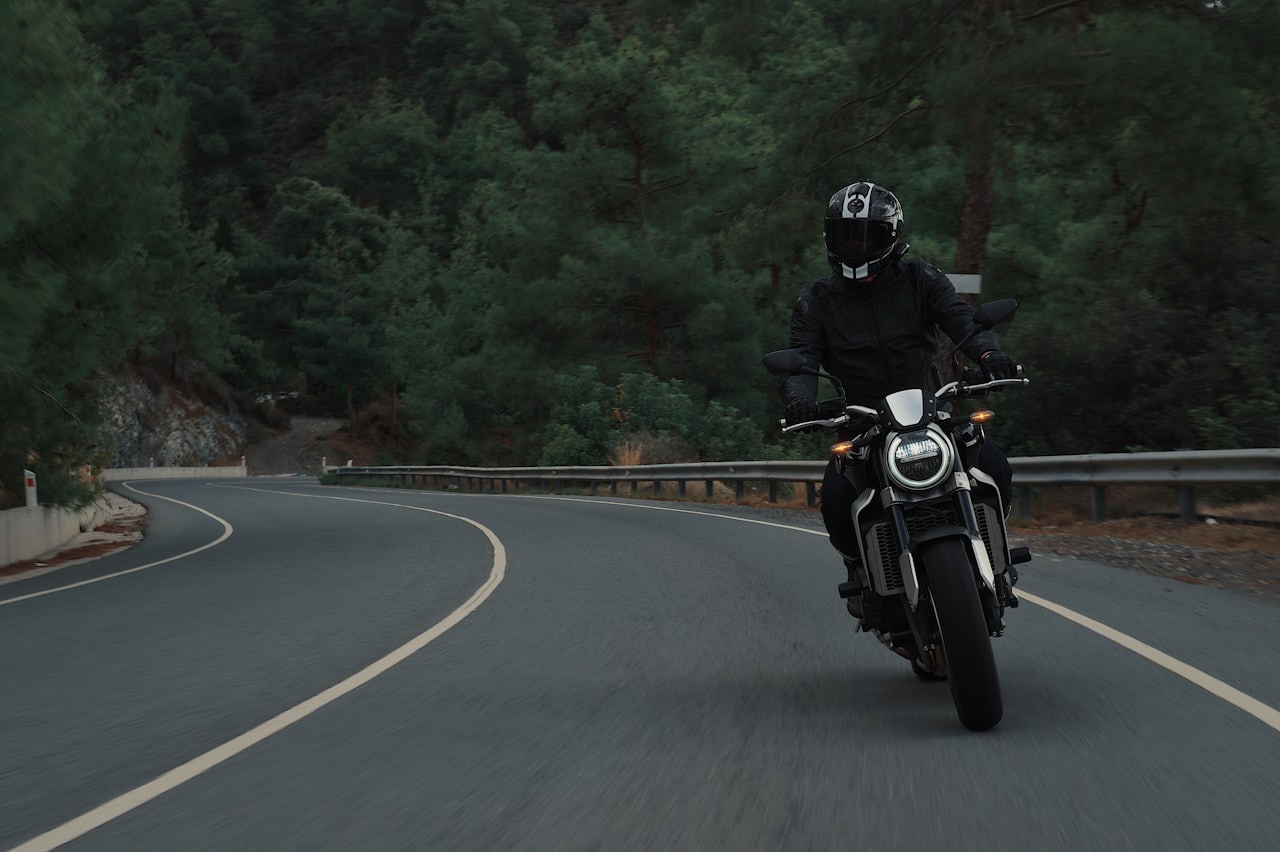
Ducati Streetfighter V4 in 2026: Is Owning a 200-HP Naked Bike Actually Worth It?
Everyone wants to talk about how a 208-hp naked bike rides on an empty mountain road. Almost nobody talks about what it costs to own one in real traffic, on a real budget, every ordinary day in between — so I did.
Advertisement
Two hundred and eight horsepower. No fairing. A handlebar instead of clip-ons, and a riding position that puts your chin roughly where a superbike rider's chest would be. On paper, the Ducati Streetfighter V4 reads like a dare: take the beating heart of the Panigale, strip away the aerodynamics and the excuse for a full tuck, and hand the whole savage package to a rider sitting bolt upright with nothing to hide behind. I have now lived with one long enough to answer the only question that actually matters, which is not whether it's fast, because obviously it is, but whether 208 hp in a naked bike is something a normal road rider should actually want to own.
The short answer is complicated, and anyone who tells you it's simple either hasn't paid for a desmo service or hasn't sat in traffic in July with a 90-degree V4 idling between their knees. Every publication on earth has already told you what this bike can do on an empty mountain road at nine in the morning, and that story is true. This is the other story: what it's actually like to own the thing, day after day, on the roads the rest of us actually ride.
Two Hundred Horsepower You Will Almost Never Use
Let's deal with the headline figure first, because it's the reason most buyers walk into the showroom. 208 hp at 12,750 rpm sounds like a number built for bragging rights, and mostly, it is. On the road, any road, in any country with a speed limit and other people on it, you will use perhaps the bottom third of that rev range for well over ninety percent of your riding. The other two-thirds exists for track days, for the one clear straight you find twice a year, and for the story you tell at the pub.
What you actually feel, hour after hour, is the mid-range shove: the way the Desmosedici Stradale hauls from 4,000 rpm with a violence that makes a 100-hp naked feel unfinished by comparison. That part of the case for this bike is real, and I won't argue against it. Third-gear roll-ons out of roundabouts are genuinely intoxicating, and no lesser naked I've ridden replicates the sensation of this V4 loading up under your right wrist at half throttle. But the peak number on the spec sheet is bragging-rights power, not usable power, and pretending otherwise is how riders end up buying far more bike than their actual riding calls for. Ask yourself honestly how many times a year you'll see an indicated 150 mph on a public road with your licence intact — if the answer is never, you are paying, in purchase price, in insurance, in every service invoice, for a top end you are buying purely to know it exists.
Living With a Desmodromic Heart
The Desmosedici Stradale is a mechanical masterpiece and also, by any sane measure, overkill for a bike that mostly does the school run. Ducati's desmodromic valve system doesn't use springs to close the valves; it uses a second set of cams to physically shut them, which is part of why this engine can spin so hard and so cleanly toward its redline. It's also why it demands attention a Japanese inline-four simply doesn't.
The valve-clearance check, the big and genuinely expensive one, where the tank comes off and a technician gets intimate with the cylinder heads, now falls at a 24,000 km (roughly 15,000-mile) interval on this generation of engine. That's a real improvement on older desmo Ducatis, and the brand deserves credit for stretching it. But "improved" is relative. That single service, even on a generous interval, will cost meaningfully more than a whole year of running something like a Z900 or an MT-09, and you'll still be doing oil and filter work on a shorter cycle in between. Budget for it the way you'd budget for a set of tyres you didn't ask for.
None of this makes the Streetfighter unreliable. Desmo engines are famously robust between services, not fragile. It makes it a bike that asks you to think like the owner of something exotic, even though it looks, sounds and rides like a street bike you could commute on. The same mechanical sophistication that makes this engine so thrilling above 8,000 rpm is the sophistication billing you every time it goes in for work.
Traffic Is Where This Bike Punishes You
Nobody buys a 208-hp naked to sit in traffic, and yet that is exactly where most owners will spend an uncomfortable share of their riding life. The Panigale at least has a fairing to route hot air away from your legs; the Streetfighter has almost nothing between the rear cylinder bank and your inner thigh, and a V4 running rich at idle to keep emissions in check throws real heat. On a cool commute it's a non-issue. Stuck at a red light in summer, with the radiator fan cycling and the exhaust baking your calf, it becomes exactly the kind of discomfort that makes you question the whole purchase.
The riding position compounds it. Ducati has softened the reach to the bars compared with the Panigale, and it genuinely is more upright, but this is still a committed sportbike wearing a naked's clothes: a decent stretch to the tank, a firm seat tuned for track feedback rather than forty-minute commutes, and suspension that transmits every expansion joint and pothole with an honesty your spine did not request. Around town, on a lane-splitting commute, the Streetfighter is a chore in a way the Panigale never pretends not to be, and a lesser naked never becomes in the first place.
The Insurance Conversation Nobody Warns You About
Insurers don't care that you'll ride sensibly. They see a three-figure horsepower number attached to an exposed riding position, with none of the fairing that even marginally protects a superbike rider's legs in a low-speed drop, and they price the policy accordingly. Add a naked's higher theft appeal, since there's no bodywork to make it instantly identifiable once the plates come off, and the premium on a Streetfighter V4 routinely lands well above what an equivalent-value adventure bike or a mid-weight naked would cost to cover, sometimes by a genuinely startling margin depending on your age, postcode and claims history.
This is the ownership cost almost nobody mentions in the glossy first-ride pieces, because a journalist testing a press bike for a week never sees a renewal quote land on the doormat. Anyone actually signing the finance agreement should get a real number before they get emotionally attached to the colour options. Here is what actually changes, in practical terms, once you sign on the dotted line:
- Fuel range shrinks fast once you start using the top of the rev range; this is not a bike built for long stints between stops.
- Tyres wear quickly under that much torque, so budget for a fresh rear sooner than you'd like.
- Desmo servicing means planning ahead for a specialist technician, not just whichever mechanic is nearest.
- Heat soak in slow-moving traffic is a genuine, recurring discomfort, not an occasional inconvenience.
- Insurance premiums reflect the power figure and the naked bodywork, not just the price tag on the invoice.
The Streetfighter V4 doesn't want a commute. It wants a racetrack, a full tank and a very understanding insurer — everything else is just where it lives when it isn't allowed to be itself.— Marcus Vale, Chief Road Tester
Streetfighter vs. Panigale vs. a Sensible Naked
So where does that leave a buyer cross-shopping this against its own siblings? Against the Panigale V4, the case for the Streetfighter is straightforward. You get almost the same soul, 208 hp against the Panigale's 214 hp, the same desmodromic heart, with a riding position that won't wreck your wrists on the way to work. If you want the V4 experience but refuse to fold yourself into a race crouch every single day, the Streetfighter is the obviously correct choice, and the money saved over the Panigale's asking price barely matters next to how much more you'll actually ride the thing.
Against a lesser naked, a Triumph Street Triple 765 RS, a Yamaha MT-09, even KTM's own 1390 Super Duke R, the calculation gets far less comfortable. These bikes deliver eighty or ninety percent of the real-world thrill on a normal road, cost meaningfully less to buy, insure and service, and don't punish you for simply existing in traffic. The gap between a Street Triple's mid-range and the Streetfighter's top-end fireworks is something you'll feel for maybe four seconds on your favourite stretch of B-road, and pay for every single day in between.
If you ride mostly on the road, at speeds a well-tuned 100-to-120 hp naked handles with total confidence, and you're honest about how rarely you'll explore the top third of this engine's rev range, a lesser naked will make you happier per pound spent. The Streetfighter V4 earns its keep only for the rider who genuinely wants, and will genuinely use, the full V4 experience at a track day or on an empty pass somewhere, and who has already made peace with what that costs on every ordinary day in between.
- Price
- from 21,995 dollars
- Engine
- 1103 cc 90° V4, Desmodromic
- Power
- 208 hp @ 12,750 rpm
- Kerb weight
- 201 kg
- 0–100 km/h
- 3.0 s
- Top speed
- 290 km/h
- Seat height
- 845 mm
Verdict
Is a two-hundred-plus horsepower naked bike worth owning in 2026? Yes, but only if you're honest with yourself about which part of the ownership you're actually buying. The riding, in the moments the Streetfighter V4 is allowed to be itself, is genuinely as good as anything wearing a number plate — the V4 snarl, the mid-range shove, the way the chassis flatters a good rider without ever feeling nervous, is a genuinely special experience that few motorcycles can match. But that experience is intermittent, and everything around it, the desmo bills, the heat in traffic, the insurance quote, the tyres you'll replace sooner than expected, is constant. For the road-only rider who wants Ducati's V4 soul without the Panigale's compromises, the Streetfighter V4 remains the right way in, provided you go in with your eyes open about running costs and honest about how much of that top end you'll actually use. For everyone else, the rider who mostly wants to grin at legal speeds without financing a second, invisible motorcycle made entirely of service invoices, a Street Triple 765 RS or an MT-09 will make you happier, more often, for meaningfully less money. Buy the Streetfighter because you want the V4 — not because you want the number on the spec sheet. Those are different purchases, and only one of them still feels worth it after the first big bill arrives.