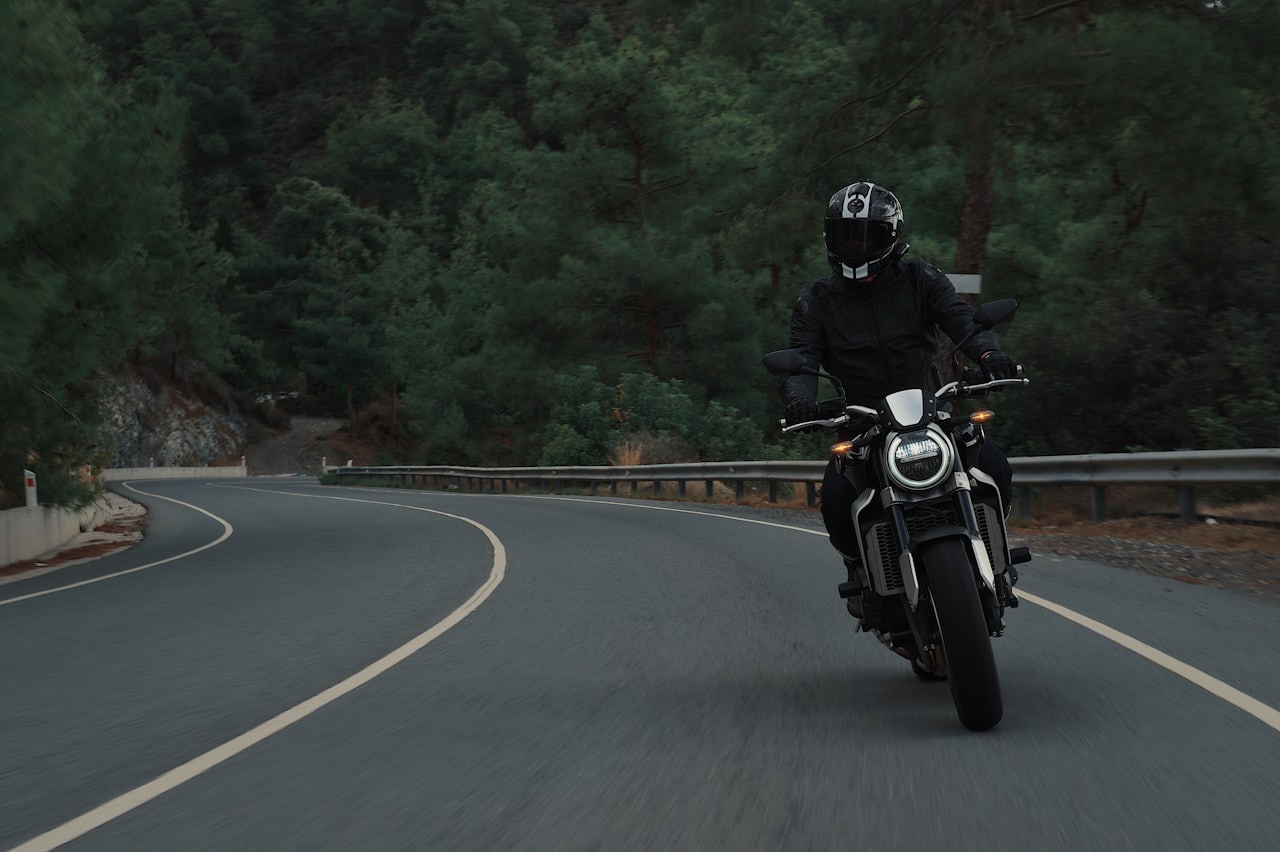
The Brutal Truth About Owning a BMW GS in the UK
The BMW GS is sold as the one motorcycle that does everything. After a year running an R1300GS through UK traffic, tyres and dealer invoices, I can tell you which parts of that promise are true — and which ones cost a great deal more than the brochure lets on.
Advertisement
Ask ten riders to name the best all-round motorcycle on sale and most of them will say the same three letters: GS. Ask ten owners who actually live with one on wet, congested, pothole-scarred British roads what it is actually like day to day, and you get a far more complicated answer. I have spent the best part of a year running a BMW R1300GS as my only bike through a UK winter, a UK summer and every kind of traffic Britain can throw at a motorcycle, and I have some things to say that the brochure conveniently leaves out.
None of it changes the fact that this is a phenomenal motorcycle. That is precisely what makes it worth talking about honestly. The GS is sold, and often reviewed, as the machine that does everything — comfortable enough for Cornwall to the Cairngorms in a day, tech-laden enough to feel like the future, and still, allegedly, an off-road adventurer at heart. Live with one daily in the UK, though, and three uncomfortable truths surface fast: it is heavy, it is expensive to keep fed with tyres, and BMW's idea of a service bill is not quite the same as yours or mine. None of that makes it a bad bike. It makes it a bike you need to go into with your eyes open.
The Weight You Feel At Every Set Of Lights
On paper, 237 kg kerb weight doesn't sound especially alarming — plenty of tourers and cruisers carry more. On a UK high street at 8:40 on a Tuesday morning, hemmed in by white vans and roadworks, it feels like a great deal more than the number on the spec sheet suggests. The GS carries its mass high and a long way from the ground, and while BMW's excellent Telelever front end and the optional adaptive ride height do a genuinely impressive job of disguising that weight once you're rolling, none of that clever engineering helps much at a dead stop on a cambered junction with a delivery driver leaning on his horn behind you. The seat drops as you slow and rises again once you're moving, which is a genuinely clever party trick for shorter riders — it just does not make the bike any lighter to actually manhandle.
Filtering is where the compromise really bites. Britain, unlike much of Europe, actually lets you filter through queued traffic, and it is one of the great everyday joys of commuting by bike here. Do it on a GS for any length of time and your shoulders and forearms will know about it by Friday. The bars are wide, the mirrors stick out further than you would like between two lines of wing mirrors, and hustling 237 kg through a gap that a Yamaha MT-07 rider barely notices requires a level of commitment, and a level of low-speed clutch control, that plenty of riders never build up simply because they never need to on anything smaller. It is not badly engineered; it is simply engineered for motorways, not Camden on a Friday evening.
The Servicing Bill Nobody Mentions In The Showroom
BMW's dealer network in the UK is good — genuinely one of the better ones for a premium brand — but good is not the same as cheap. A routine service on a boxer GS is comfortably into three figures even for the smaller interim checks, and the bigger valve-clearance service, when it falls due, is the kind of bill that makes you double-check the invoice. None of this is unique to BMW; premium brands generally charge premium labour rates, and the GS's complexity — radar sensors, electronic suspension, adaptive lighting — means there is simply more on the bike that can need attention, and more diagnostic time billed at main-dealer rates to find out what that attention actually is.
The options list makes this worse in a very specific way. Every clever feature that makes the GS such an effortless motorway companion — the radar cruise, the electronic suspension, the heated everything — is also a sensor, a motor or a control unit that eventually needs checking, resetting or replacing, usually by someone with BMW-specific diagnostic kit rather than a socket set on your garage floor. Independent specialists are catching up fast and can save real money over a main dealer, but plenty of GS owners, understandably nervous about a five-figure motorcycle, end up back at the dealership out of caution rather than necessity, and the bill reflects that choice every single time.
Tyres: The Real Running Cost Of A Big Adventure Bike
Here is the bit that catches new GS owners out hardest, and it is rarely mentioned until you are stood at the counter of a tyre shop wondering why the invoice is so much higher than it was for your last bike. A big adventure motorcycle used mostly on tarmac, which is exactly how the vast majority of GS owners actually ride, is a genuinely brutal environment for a tyre. You have serious weight, serious torque from that boxer twin, and a tyre carcass tough enough to survive the odd gravel track, all being asked to also behave itself and last on dry, grippy British B-roads. Ride the GS with any enthusiasm on twisty tarmac — and it is genuinely good fun to ride enthusiastically, which is half the problem — and the rear can look distinctly sorry for itself well before you would expect on lighter machinery.
None of this is a defect; it is physics. A heavier bike with more torque wears its contact patch faster, and a tyre built to survive some off-road abuse is inherently a compromise on pure tarmac longevity. A matching pair of decent touring-biased adventure rubber, fitted, is also not a small number, simply because the sizes are larger, the compounds more specialised, and there are fewer manufacturers making them at all. It is a genuinely significant, entirely predictable running cost that the glossy brochure photography of dust and gravel never quite prepares you for — given that dust and gravel is where most GS tyres will spend almost none of their working life.
- Main-dealer servicing that reflects a genuinely complex motorcycle, not a simple boxer twin.
- A rear tyre that rarely sees the mileage you would hope for once you actually enjoy the throttle.
- An options list so tempting it can add thousands to the price before you have ridden a mile.
- Real physical effort at low speed and in traffic that a spec sheet will never capture.
- Insurance and parts costs that track the bike's premium positioning, not its age.
The GS never once let me down on the road. It just quietly asked me to respect its weight, its tyres and its dealer invoices every single time I rode it.— Diego Marroquín, Adventure Correspondent
Would The F 900 GS Make More Sense?
This is the question I kept coming back to, and it is one BMW would probably rather I didn't ask quite so loudly. The F 900 GS sits in the same family, wears the same badge, and gives away a genuinely useful chunk of weight — 219 kg against the 1300's 237 kg — along with a smaller, easier-to-manage footprint at a standstill. For the enormous slice of UK riding that is actually commuting, weekend blasts and the occasional ferry to Europe rather than genuine wilderness exploration, that lighter middleweight twin covers almost all of the same ground with noticeably less drama in traffic and, in my experience, a gentler bill at tyre-changing time too.
What you give up is real, and worth being honest about. The 1300's boxer has a wall of torque and a sense of unhurried authority the parallel-twin simply cannot match two-up and fully loaded, and the bigger bike's tech ceiling — radar cruise, adaptive ride height, the full electronic suspension package — is either absent or more limited on the smaller machine. If your idea of adventure genuinely involves loaded panniers, a pillion and serious distance on unfamiliar roads, the 1300 earns its extra weight and its extra cost. If it mostly involves the M25, a Sunday loop through the Peaks and one big trip a year, I suspect a lot of GS owners would be happier, and considerably better off, on the smaller bike.
What You Get Back For The Trouble
None of the above is an argument for not buying one, and I want to be clear about that, because it would be dishonest to pretend otherwise after the miles I've put in. The reason the GS commands the premium, the loyalty and the price it does is that it is genuinely, measurably brilliant at the thing it was actually built for: making enormous distances disappear in comfort. Point it at a motorway and the radar cruise, the wind protection and that broad spread of boxer torque combine into something close to effortless — hours pass in a way they simply do not on a smaller, more focused motorcycle.
Off the motorway it keeps giving. The chassis is genuinely composed on a fast A-road despite the mass, the electronics are calibrated with real intelligence rather than piled on for a spec sheet, and the sense of unflappable competence, once you're actually moving, is hard to overstate. Every uncomfortable truth in this piece is a truth about living with the bike at low speed, in traffic, or in front of an invoice. Not one of them is a truth about what happens once you're actually riding it properly, and that is precisely why so many owners forgive the rest.
- Kerb weight
- 237 kg (R 1300 GS) vs 219 kg (F 900 GS)
- Engine
- 1300 cc boxer twin vs 895 cc parallel-twin
- Power
- 145 hp vs 105 hp
- Fuel tank
- 19 L vs 14.5 L
- Seat height
- 850 mm, adaptive vs 870 mm, fixed
So, Is It Actually Worth It?
Yes — but only if you buy it for what it actually is rather than what the adverts imply. The R1300GS is not, for most UK owners, the go-anywhere dirt bike its marketing loves to suggest; it is a superb, occasionally magnificent motorway and A-road tourer that happens to be able to cope with a gravel track if you really need it to. Judge it against that honest job description, budget properly for the tyres and the dealer invoices, and it is very hard to argue with.
Judge it against a fantasy of green-laning to the Cape and back, and the weight, the running costs and the sheer physical effort of daily traffic will wear you down long before the tyres do. Buy the bike for the roads you actually ride, not the ones in the brochure photography, and the GS remains one of the most complete motorcycles you can own in Britain today — brutal truths, running costs and all.